Implemented development capabilities
A foundation to explore.
01Development scope · not releasedRecord compact, structured events
C++ calls record identifiers and bounded typed values. Automatically generated catalogs supply message formats and build identity during decoding; provider checks verify logging-only metadata removal.
02Development scope · not releasedInvestigate through real viewers
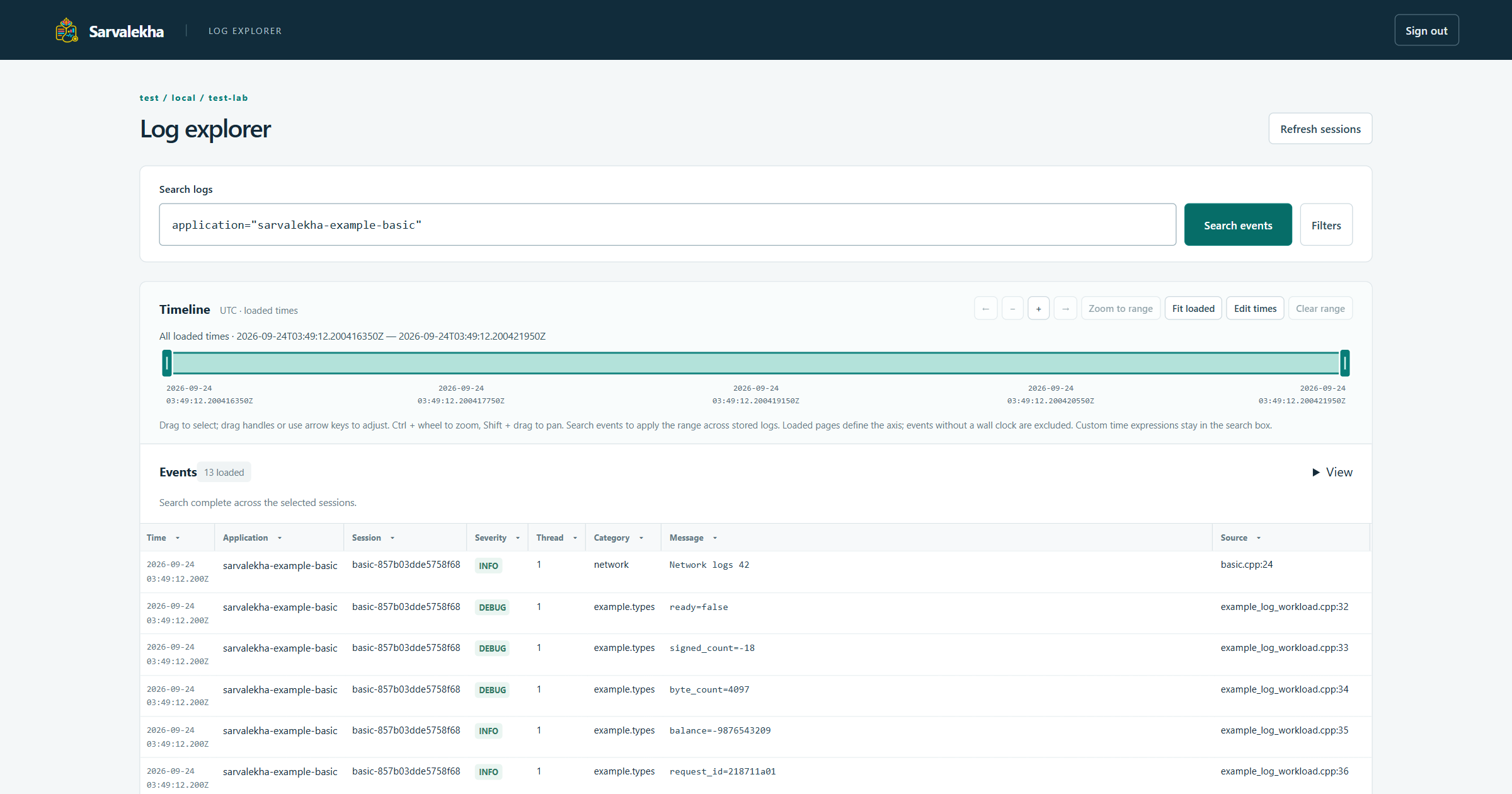
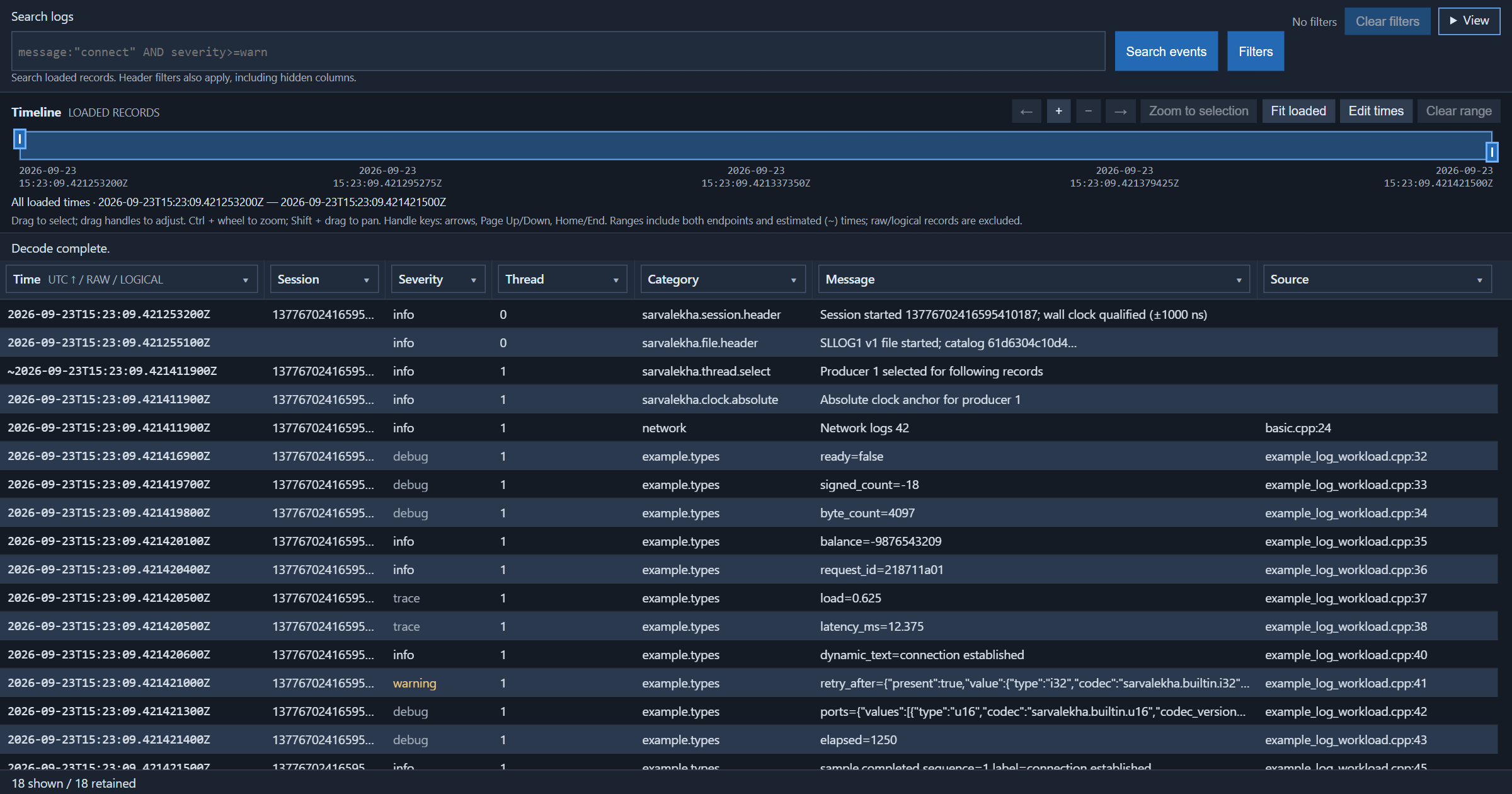
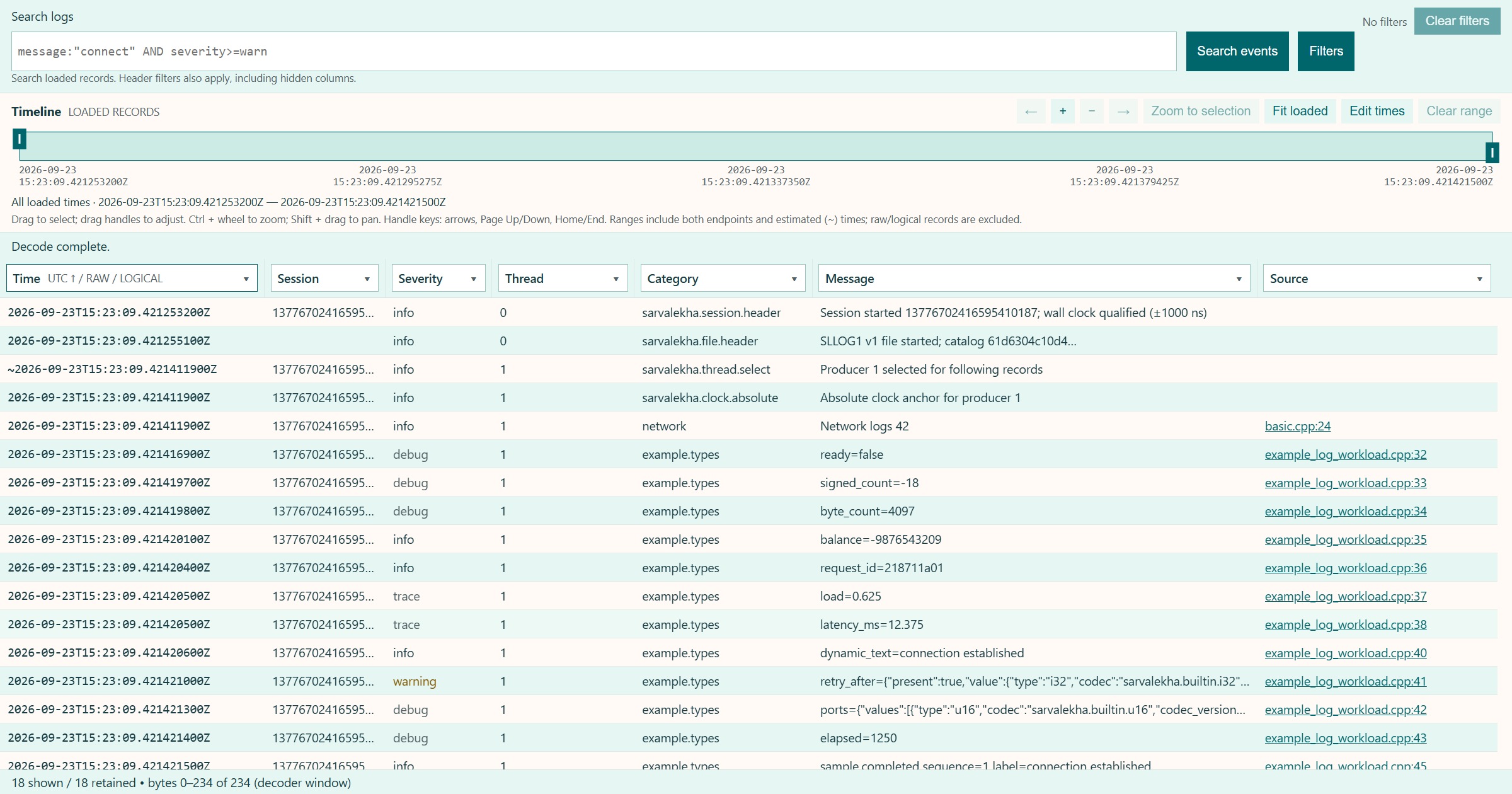
The desktop Viewer and VS Code webview inspect native logs, exact catalogs, typed fields and trusted source mappings. Local searches cover loaded records.
03Development scope · not releasedRecover retained context
The full native decoder can recover committed events still present in supported Windows dumps and Linux cores. Missing, overwritten or uncaptured memory cannot be reconstructed.
04Development scope · not releasedSearch on a configured local server
The Windows Helper can upload completed native files. A privately configured Windows x64 server supports bounded artifact search and export with scoped access. This is not a hosted service offer.
05Development scope · not releasedKeep AI investigation bounded
An optional development controller uses configured endpoints, read-only tools and separate evidence-disclosure permissions. Protocol fixtures do not qualify model accuracy or hosted privacy agreements.
06Development scope · not releasedFollow recorded trace context
Explicit trace/span identities and an opt-in trace-aware API connect recorded events. The static, field-free span lifecycle subset retains starts, ends, parentage, events, links and status. Complete distributed tracing remains unfinished.
Know the boundaries
Scope matters.
- Under development, with no supported public product release or generally available hosted service. Preview labels identify implemented development capabilities.
- Exact matching catalogs are required. Native capture, platform, delivery and resource qualification remain incomplete; logging is best-effort.
- Explicit sensitive-field classification and redaction are not automatic PII discovery or whole-dump sanitization. Key-provider integration remains incomplete.
- Partial trace correlation and static span lifecycle inspection do not establish complete distributed tracing. Server querying has bounded member size, record counts and coverage.
- Lower CPU, memory, storage and I/O costs are design goals. Catalog separation does not establish universal overhead, measured savings, losslessness or availability guarantees.
Part of Diagnostics
The C++ logging SDK.
The SDK provides the C++ producer foundation, automatic catalog generation and reference decoding. It keeps its developer identity as a Diagnostics component. The full product decoder adds crash and diagnostic inspection beyond ordinary SDK decoding.
Customer headers require C++20; runtime and tools use C++23. Accepted Windows and Linux development profiles require matching toolchain and build evidence, rather than implying a supported release matrix.
Read the SDK scope notes →A place in the wider picture
Connected, with clear roles.
What comes next
Direction, without a deadline.
- Complete tracing, propagation, loss accounting and backend qualification
- Broader capture, delivery, platform and resource qualification
- Broader interactive identity and managed service operation
View the product roadmap →